Busted! Debunking the Myths About Unsupported Gloves

Industrial Hand Protection for Demanding Working Environments

Industrial operations across construction, manufacturing, surface treatment, painting and cleaning expose workers to abrasive materials, wet surfaces, oils and processing substances. These conditions require protective gloves that balance durability, flexibility, grip and comfort.

Effective hand protection goes beyond glove thickness. Material composition, grip performance and wearing comfort all contribute to safer, more efficient handling during demanding industrial tasks.

Neoprene-blended latex industrial gloves combine the protective properties of neoprene with the natural elasticity of rubber latex, offering versatile hand protection for a range of industrial applications.


Neoprene-Blended Latex Gloves in Industrial Applications

By combining neoprene with natural rubber latex, these reusable gloves provide flexibility, reliable grip and resistance to suitable industrial chemicals and oils.

Their versatility supports several industries:

  • Construction: Handling building materials, tools and wet equipment.
  • Painting and surface preparation: Working with coating materials, containers and suitable stripping substances.
  • Industrial manufacturing: Repetitive handling of components and production equipment.
  • Industrial cleaning: Handling cleaning tools, wet surfaces and compatible cleaning agents.
  • General maintenance: Equipment servicing and handling materials exposed to oils or industrial substances.


Nastah NEB2113 and NEG2812: Industrial Protection for Different Demands

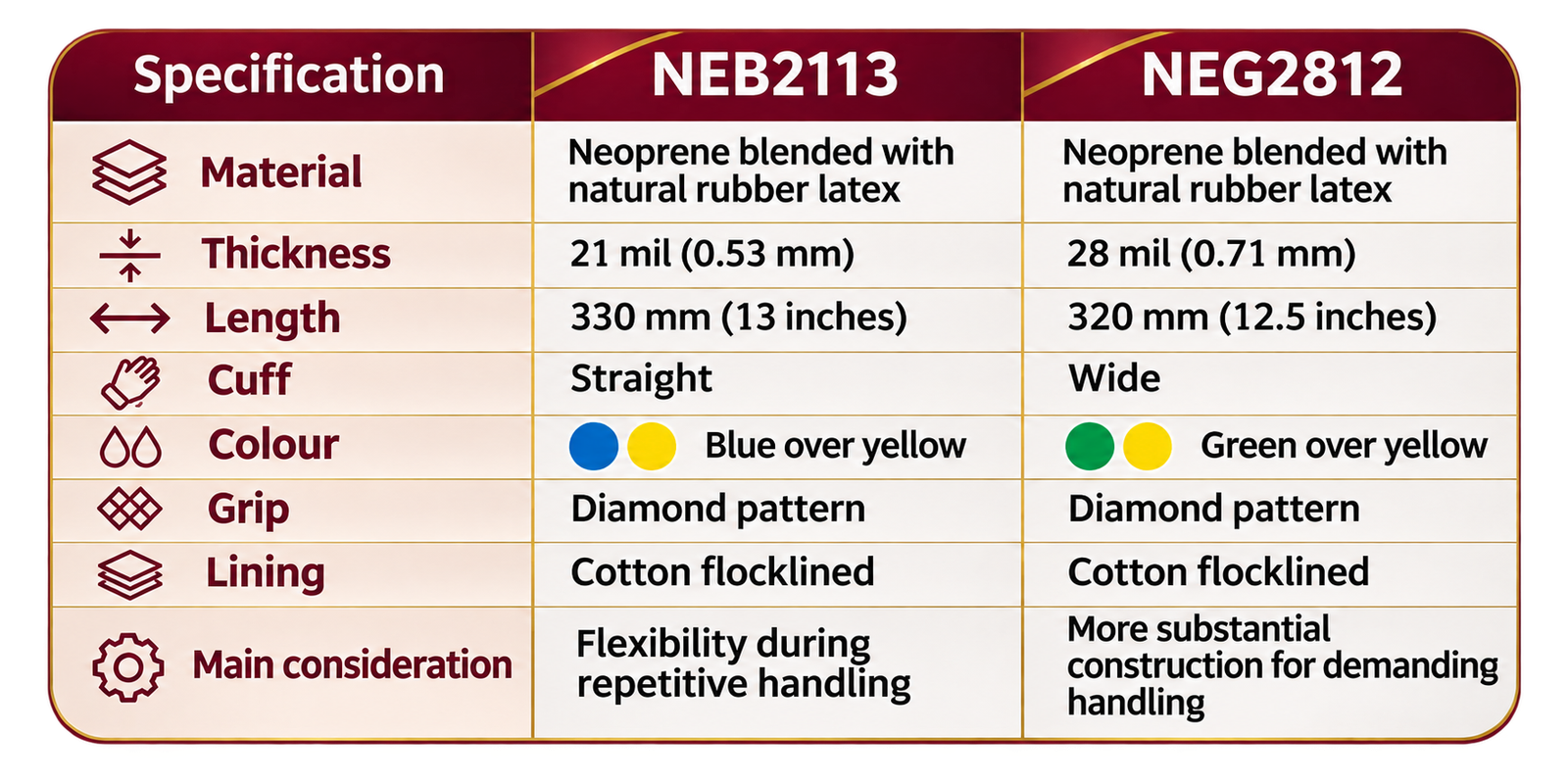
Nastah offers two neoprene-blended latex industrial gloves with different thicknesses and cuff designs to accommodate varying workplace requirements.

The Nastah NEB2113 Neoprene Blended Bi-colour Gloves feature 21 mil (0.53 mm) thickness, a 330 mm (13-inch) length and a straight cuff.

Its comparatively lighter construction prioritises flexibility and ease of movement, making it a practical choice for industrial manufacturing and painting operations that involve frequent, controlled hand movements.

From assembling production components to handling paint rollers and coating equipment, NEB2113 supports repetitive tasks requiring dexterity and consistent handling. Its diamond-pattern grip provides added control, while cotton flock lining contributes to comfortable wear throughout daily operations.


NEG2812: Heavy-Duty Protection for Industrial and Chemical Handling

The Nastah NEG2812 Neoprene Blended Bi-colour Gloves feature 28 mil (0.71 mm) thickness, a 320 mm (12.5-inch) length and a wide cuff.

With its thicker neoprene-latex construction and resistance to specified chemicals and oils, NEG2812 is a practical option for industrial work requiring a more substantial protective barrier.

It is particularly relevant to industrial maintenance, equipment cleaning and suitable chemical-handling operations, where workers encounter oils, cleaning agents and processing substances. Its heavy-duty construction also supports demanding material-handling activities in construction and manufacturing.

The wider cuff facilitates convenient donning and removal, while its PPE Category III and EN ISO 374-1 Type A classification demonstrates tested protection against specified chemicals.


Industrial Performance Beyond Basic Protection

Both NEB2113 and NEG2812 incorporate features that contribute to reliable workplace protection.


Chemical and Oil Resistance

The neoprene-latex blend provides resistance to suitable chemicals and oils, supporting industrial tasks involving exposure to compatible substances.

Secure Grip and Flexibility

Diamond-pattern grip enhances traction when handling wet or slippery materials, while natural rubber latex elasticity supports comfortable hand movement.

Comfort During Extended Wear

Cotton flock lining provides a comfortable interior, helping reduce discomfort during prolonged industrial activities.

Certified Industrial Protection

Both models are classified as PPE Category III and EN ISO 374-1 Type A, providing tested chemical resistance performance. Glove selection should follow the relevant chemical compatibility data and workplace exposure requirements.


Selecting Between NEB2113 and NEG2812

Although both gloves share a neoprene-blended latex construction, their different thicknesses and cuff designs offer distinct advantages.

In the realm of hand protection, unsupported gloves hold a prominent position. These thin, single-layer wonders offer unparalleled dexterity and tactility, making them ideal for intricate tasks.

However, several myths surround unsupported gloves, potentially leading to confusion and improper selection. Let’s debunk some of the most common misconceptions and shed light on the true potential of unsupported gloves. 

Myth #1: Unsupported Gloves Are Disposable Only

Busted! While some unsupported gloves are indeed disposable, many are designed for reusability. The key lies in the material and thickness.

Thinner, single-layer unsupported gloves might be intended for single use. However, thicker unsupported gloves can be reused multiple times if inspected for tears, punctures, or signs of degradation.

Remember, reusability also depends on the specific application and the level of contamination encountered. 


Myth 2: All Unsupported Gloves Are Created Equal

The truth is that not every glove provides the same degree of performance or protection. Different materials have different uses, including vinyl, polyethylene, nitrile, and latex.

For example, latex gloves give better flexibility while nitrile gloves offer improved chemical resistance.

Choosing the right glove requires an understanding of the material qualities and intended function. 


Myth #3: Unsupported Gloves Are Not Durable

Durability in unsupported gloves depends on two key factors: material and thickness.

For instance, nitrile offers better resistance to abrasions compared to latex, but latex trumps nitrile in flexibility and elasticity. Interestingly, thicker unsupported gloves can even provide superior protection compared to some supported gloves.

The ultimate key to ensuring strong protection? Check the EN standard of the gloves you’re considering. This will give you a clear picture of their certified capabilities.


Myth #4: Unsupported Gloves are Less Comfortable

While unsupported gloves are known for their dexterity, some come with a surprising bonus – a comfortable lining.

This lining can:

  • Reduce friction: A thin liner helps your hand glide smoothly inside the glove, preventing irritation and blisters during extended wear.
  • Absorb moisture: Lined gloves can help wick away sweat, keeping your hands drier and more comfortable, especially in warm environments.
  • Enhance warmth: In colder settings, a thin liner can provide an extra layer of insulation, keeping your hands warmer.


Choosing the Right Glove: It’s All About Your Needs

Now that we’ve debunked these myths, remember – there’s no one-size-fits-all solution. Consider the specific hazards in your workplace, the tasks involved, and the desired level of dexterity when selecting gloves. Don’t hesitate to consult safety professionals or glove manufacturers for expert recommendations.


Looking for high-quality, reliable unsupported gloves?

At Nastah, we offer a wide range of unsupported gloves designed for optimal dexterity and comfort. From nitrile to latex, we have the perfect gloves to meet your specific needs. Browse our selection today and experience the difference unsupported gloves can make!

 

You May Also Like……

Be The First To Know About Our Latest Insights – Subscribe To Our Blog Today!


By subscribing to our blog, you’ll be the first to know about our latest articles and insights.

Simply enter your name and email address in the form below, and select the topics that interest you.

We promise to never share your information with anyone else, and you can easily unsubscribe at any time.