When companies review PPE spending, gloves are often treated as a simple consumable.
The thinking is understandable: if workers need gloves every day, the cheaper option looks like the smarter option.
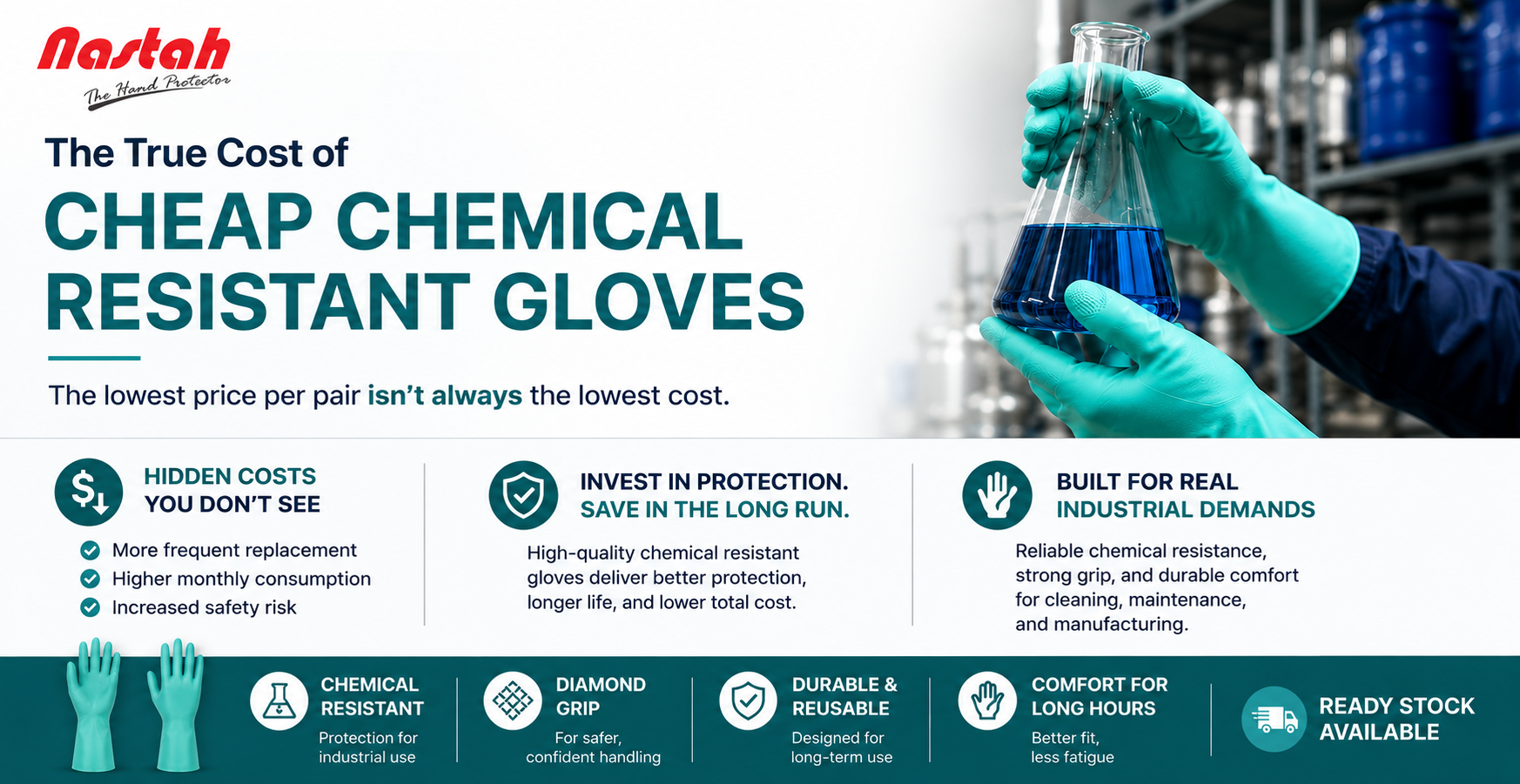
But in chemical handling, cleaning, maintenance, manufacturing, and industrial work, the lowest price per pair is not always the lowest cost. In many cases, cheap chemical resistant gloves can become more expensive over time through faster replacement, poor grip, worker discomfort, safety concerns, and operational disruption.
The real question is not:
“How cheap is this glove?”
The better question is:
“How well does this glove protect our people, support productivity, and control cost over time?”
Cheap Gloves Can Create Hidden Costs
A glove that looks affordable on a purchase order can become costly once it reaches the worksite.
If the glove wears out too quickly, workers need to replace it more often. If the grip is weak, handling wet, oily, or chemical-coated surfaces becomes slower and riskier. If the material is too thin or poorly suited to the task, the glove may fail before the job is complete.
These hidden costs can appear in several ways:
-
More frequent glove replacement
-
Higher monthly PPE consumption
-
Increased worker complaints
-
Reduced confidence during chemical handling
-
Slower work due to poor grip or poor fit
-
Higher safety risk from unsuitable hand protection
-
Emergency reordering when stock runs low
For procurement teams, this means the cheapest glove may not actually reduce spending. It may simply move the cost into other parts of the operation.
Why High Quality Is Paramount In Chemical Handling
Chemical resistant gloves are not ordinary work gloves. They are part of a company’s hand protection strategy.
Workers may be exposed to detergents, oils, cleaning agents, solvents, acids, alkalis, or other industrial liquids. The glove must be suitable for the type of chemical, the duration of contact, the working environment, and the level of grip required.
A good chemical handling glove should help workers perform safely and consistently. It should offer dependable protection, practical comfort, and durability that makes sense for repeated industrial use.
When quality is overlooked, the risk is not only product waste. It can affect worker safety, productivity, and compliance.
Price Per Pair vs. Cost Per Use
Many buyers compare gloves by price per pair. That is a simple way to compare quotations, but it does not show the full picture.
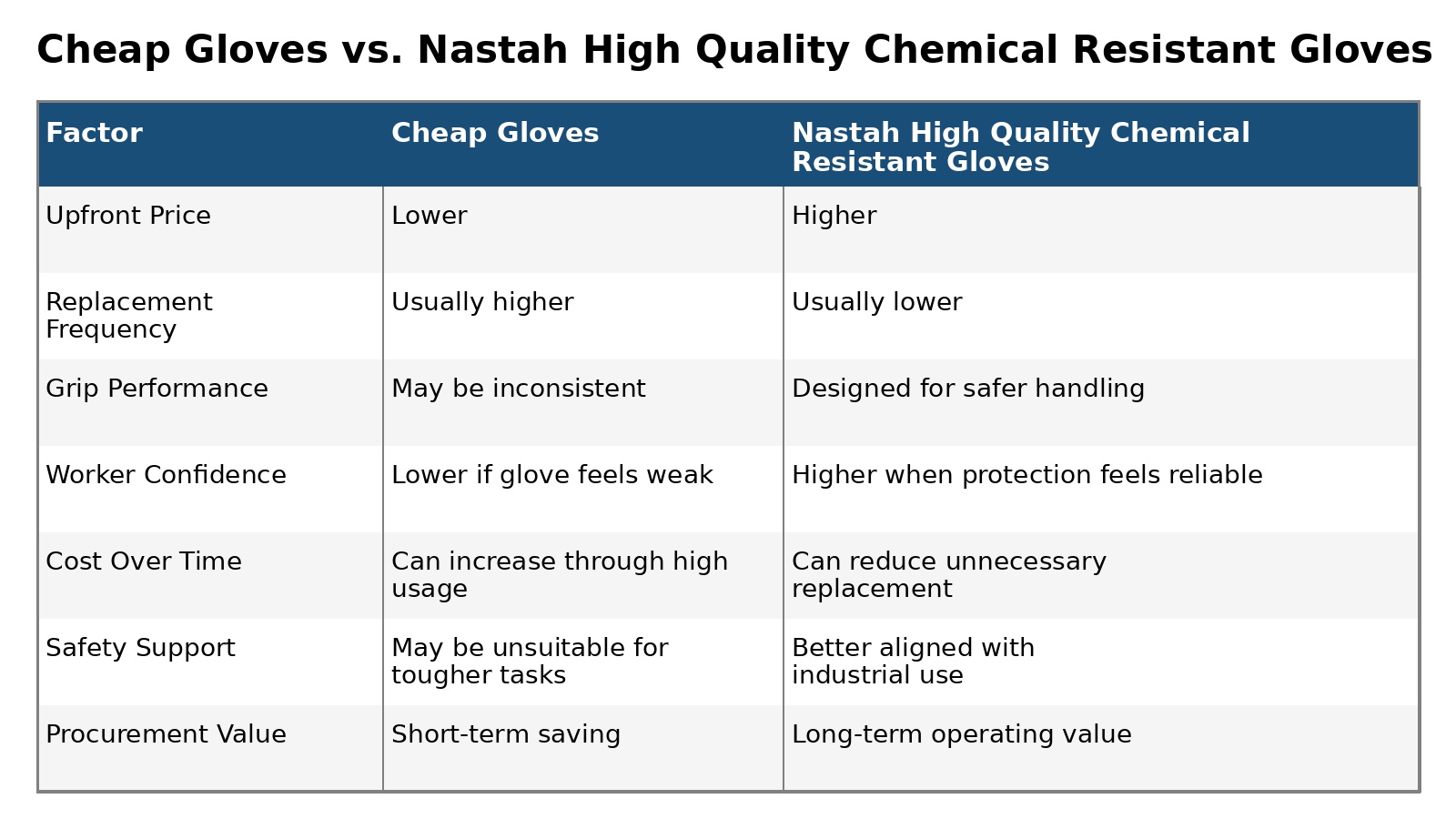
A lower-priced glove that lasts one shift may cost more than a better glove that lasts longer and performs more reliably.
Cost per use gives a more realistic view.
For example, if workers replace cheap gloves frequently because they tear, lose grip, or become uncomfortable, total usage increases. That means more purchasing, more storage, more disposal, and more time spent managing replenishment.
A durable reusable rubber glove can help reduce unnecessary changeovers and support better long-term value.
What To Look For In Chemical Resistant Gloves
Before choosing a chemical resistant glove, buyers should consider more than price.
A practical checklist includes:
-
Chemical resistance for the intended application
-
Grip performance in wet or slippery conditions
-
Durability for repeated industrial use
-
Suitable glove length and coverage
-
Comfort for long working hours
-
Proper fit for the workforce
-
Reliable supply from a trusted manufacturer
-
Clear product information and sales support
The right glove should match the actual job, not just the purchasing budget.
Nastah Chemical Resistant Reusable Gloves
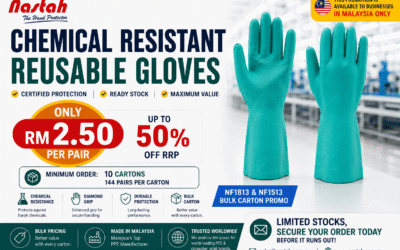
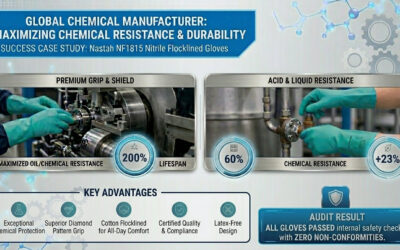
Nastah chemical resistant reusable gloves are designed for industrial users who need dependable hand protection for chemical handling, cleaning, maintenance, and manufacturing environments.
Models such as NF1813 and NF1513 are suitable for companies looking for practical chemical protection, reliable grip, and better value over repeated use.
Key benefits include:
-
Chemical resistant protection for industrial work
-
Diamond grip for better handling control
-
Durable reusable design
-
Practical choice for high-usage workplaces
-
Ready stock availability
-
Suitable for factories, cleaning teams, maintenance teams, and industrial operations
When your team uses gloves every day, choosing the right product can make a measurable difference.
The Smarter PPE Decision
In today’s market, companies are under pressure to control cost without compromising safety. That makes PPE selection more important, not less.
Cheap gloves may seem attractive at first, but if they lead to faster replacement, poor worker compliance, weak grip, or safety concerns, the real cost becomes much higher.
Quality chemical resistant gloves help protect workers, reduce waste, improve consistency, and support better long-term purchasing value.
If your current gloves are tearing too quickly, causing complaints, or being replaced too often, it may be time to review your hand protection strategy.
Contact our sales team today for a suitable Nastah chemical-resistant glove recommendation and quotation.