
Certified Protection: The Standards Behind Safe Gloves
What Are Safety Standards for Gloves?
Workplace gloves serve as essential protective gear, safeguarding workers from hazards like chemicals, cuts, and contamination. But not all gloves offer the same level of protection. Safety standards and certifications ensure that gloves are rigorously tested for durability, effectiveness, and compliance with industry regulations.
Why Do Certifications Matter?
Hand injuries account for a significant percentage of workplace accidents, many of which are preventable with proper hand protection. Choosing certified gloves helps you:
✔ Ensure workplace safety – Reduce risks of injuries, contamination, and chemical exposure.
✔ Meet legal requirements – Comply with safety regulations to avoid penalties and liabilities.
✔ Improve durability and performance – Invest in gloves that offer long-lasting protection.
When Should You Consider Certified Gloves?
If your business involves handling chemicals, food, or working in hazardous environments, certified gloves are a must. They are particularly crucial in industries such as:
- Manufacturing & Industrial Work – Protection from mechanical and chemical hazards.
- Food Handling – Ensuring compliance with hygiene and safety regulations.
- Healthcare & Lab Work – Guarding against contamination and infections.
- Cleaning & Sanitation – Resisting harsh cleaning agents.
How Nastah Ensures Certified Protection
At Nastah, we are committed to producing high-quality reusable gloves that comply with key industry certifications. Here’s what these certifications mean and why they matter:
🛡 CE Marking – What is it?
The CE marking is a mandatory certification for products sold in the European Economic Area (EEA). It indicates that our gloves meet EU Regulation 2016/425 for Personal Protective Equipment (PPE), ensuring compliance with strict safety, health, and environmental protection requirements.
🔹 Why does it matter?
CE-certified gloves guarantee that users are protected against potential workplace hazards. This certification ensures that our gloves have been rigorously tested for chemical resistance, durability, and overall safety, making them suitable for industries that require PPE compliance in Europe and beyond.
🛡 ISO Certifications – What is it?
ISO (International Organization for Standardization) sets global benchmarks for quality management and safety. Nastah adheres to two key ISO standards:
- ISO 9001: Focuses on maintaining a consistent quality management system (QMS) in manufacturing.
- ISO 374: Ensures that our gloves provide protection against hazardous chemicals and microorganisms.
🔹 Why does it matter?
ISO-certified gloves undergo strict quality control and testing at every production stage. This means businesses can trust that our gloves consistently meet high safety and performance standards, reducing risks in hazardous work environments.
🛡 EN Standards – What is it?
EN standards are European safety guidelines for protective gloves. Two key standards that Nastah follows are:
🛡 EN Standards
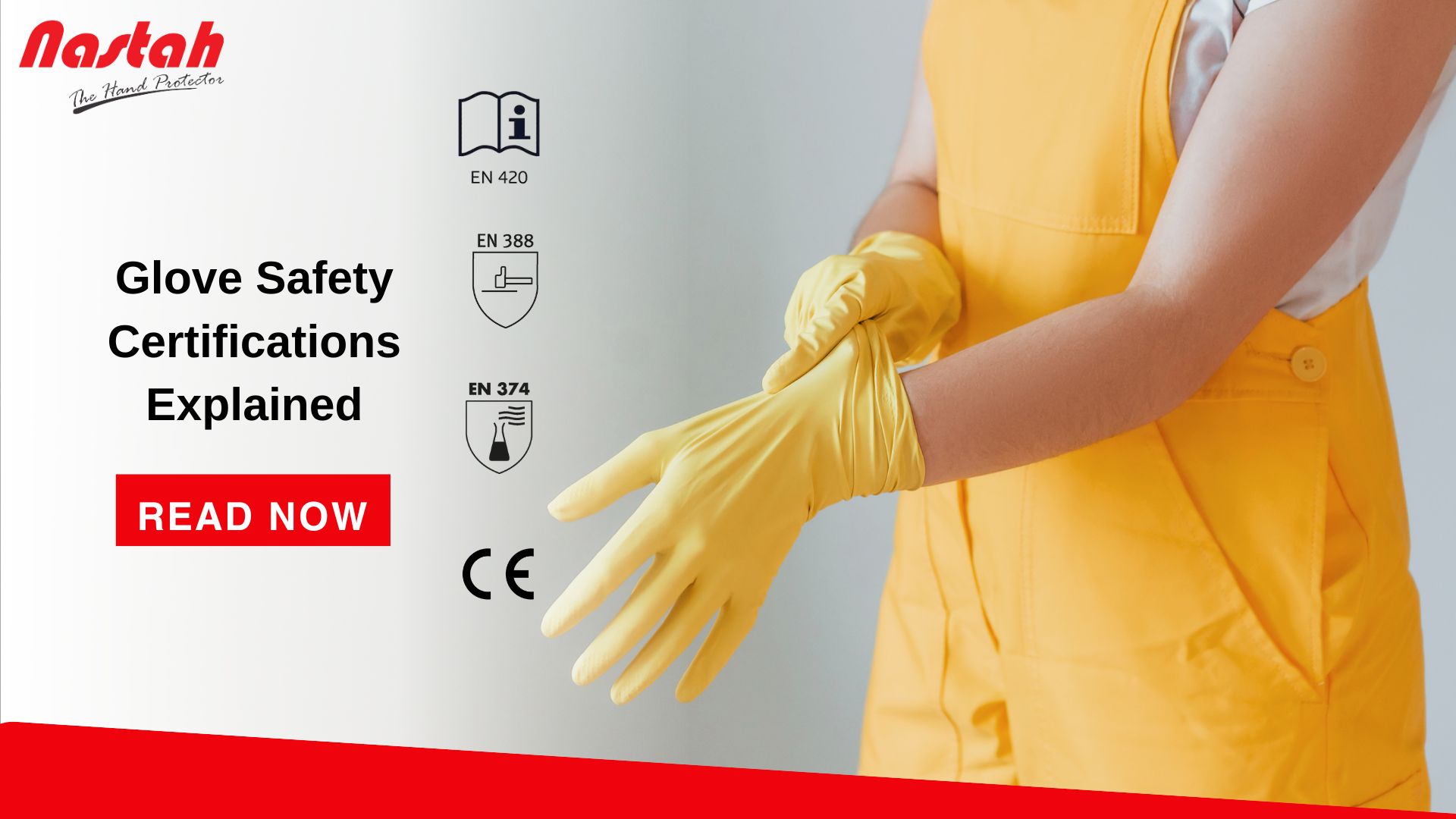
- EN 420 – Covers general glove requirements, including fit, comfort, and durability.
- EN 374 – Specifies protection levels against chemicals and microorganisms.
- EN 388 – Defines mechanical protection levels, including resistance to abrasion, cuts, tears, and punctures.
🔹 Why does it matter?
Compliance with EN standards ensures that our gloves are ergonomically designed for comfort, making them easier to wear for extended periods without compromising protection. Businesses handling chemicals, cleaning agents, or biological hazards can rely on our EN-certified gloves for safety and durability in demanding work environments.
Why European Standards Matter for Gloves
Many gloves used worldwide, including those manufactured in Malaysia, comply with European standards. Here’s why this is important:
🔹 Global Recognition – CE and EN-certified gloves meet strict safety requirements accepted in many regions, ensuring quality and consistency.
🔹 Higher Safety Assurance – European safety standards are among the most rigorous in the world, ensuring gloves are tested for chemical resistance, durability, and protection.
🔹 Reliable Performance – Choosing gloves that meet internationally recognized standards helps reduce risks, ensuring workers have the best possible protection in their specific work environments.
🔹 Industry Compliance – Many industries, including food, healthcare, and industrial sectors, require gloves that meet global certification standards to maintain safety protocols.
By understanding these safety standards, businesses and workers can make informed decisions when selecting gloves that offer the best protection, compliance, and durability.
Ready to Make the Right Choice?
See how our certified gloves can protect your team—request a sample today! Explore our product range or contact us for more details.